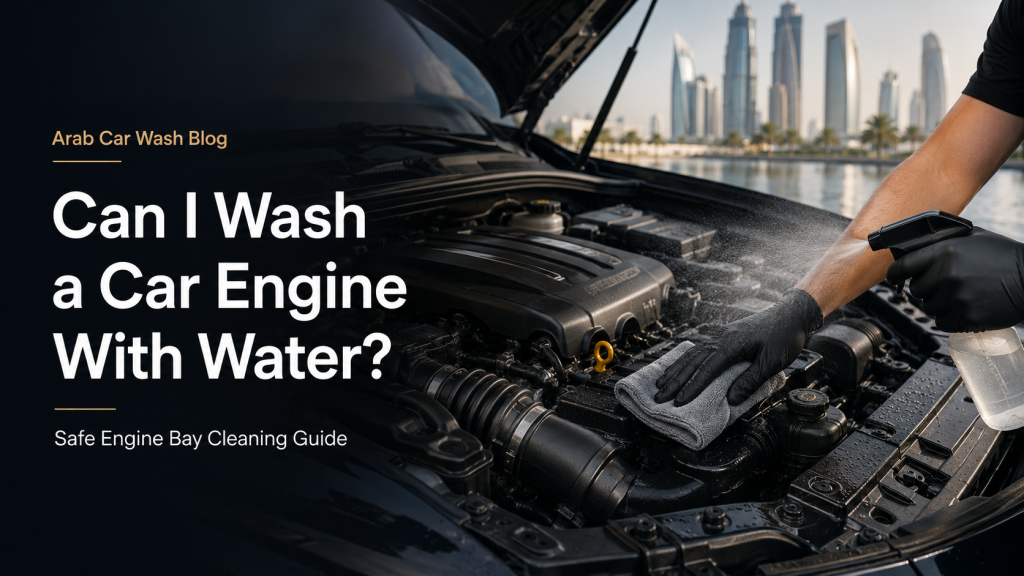
Many car owners wonder, “Can I wash a car engine with water?” The simple answer is yes, but only when the engine bay is cleaned carefully and the sensitive components are properly protected.
Modern vehicles are designed to handle light moisture inside the engine compartment. However, this does not mean you should spray water everywhere or use a high-pressure washer directly on the engine. Incorrect engine washing can allow water to enter electrical connections, sensors, ignition components, or the air intake system.
In this guide, we explain how to clean a car engine safely, what parts must remain dry, and when it is better to use a professional engine cleaning service in Abu Dhabi.
Is It Safe to Wash a Car Engine With Water?
You can use a small amount of water to clean the engine bay, provided that:
- The engine is completely switched off
- The engine has cooled down
- Electrical components are covered
- Low-pressure water is used
- Water is not sprayed directly into sensitive areas
- The engine bay is dried properly afterward
Vehicle manufacturers advise owners to be careful when cleaning under the bonnet. Ford, for example, warns against using a pressure washer in the engine bay because strong water pressure can damage wiring and radiator fins. It also recommends cleaning only when the engine is cool and switched off.
Toyota recommends allowing the engine to cool and using a wet cloth with warm water for minor dirt and debris. It also advises checking the vehicle owner’s manual because cleaning requirements can vary between different models.
Therefore, engine washing is not simply a matter of opening the bonnet and spraying it with a hose. It requires controlled cleaning and proper preparation.
Why Do People Clean Their Car Engines?
An engine bay can collect dust, sand, oil residue, leaves, grease, and road dirt over time. This is especially common in Abu Dhabi, where dry weather and airborne dust can quickly settle inside the engine compartment.
Cleaning the engine bay can provide several benefits.
A Cleaner Overall Appearance
A clean engine compartment improves the overall appearance of the vehicle. This can be particularly useful when selling the car, preparing it for inspection, or completing a full car detailing service.
Easier Detection of Leaks
Heavy dirt and grease can make it difficult to identify oil, coolant, or other fluid leaks. Once the engine bay is clean, new leaks may be easier to notice.
However, engine cleaning does not repair a leak. Any visible oil or fluid leakage should be inspected by a qualified mechanic.
Removal of Dust and Debris
Dust, leaves, sand, and other debris can collect around the battery area, air intake housing, fluid reservoirs, and the base of the windscreen. Controlled cleaning helps remove this buildup.
Better Results From Professional Detailing
Engine bay cleaning adds a finishing touch to a complete vehicle detailing service. It helps make both the visible and less-visible areas of the car look properly maintained.
What Can Go Wrong When Washing a Car Engine?
Although water can be used safely, incorrect washing can create problems.
Electrical Problems
Modern vehicles contain sensors, computers, wiring connectors, control modules, and electrical distribution boxes. Strong water pressure may force moisture past seals and into these components.
This can lead to warning lights, poor engine performance, electrical faults, or difficulty starting the vehicle.
Water Entering the Air Intake
The air intake supplies air to the engine. Water must never be allowed to enter the air filter housing or intake system.
A small amount of surface moisture around the engine bay is different from water entering the engine itself. Water inside the intake system can cause serious damage.
Ignition Problems
Ignition coils, spark-plug wells, spark-plug wires, and related electrical connections should remain dry. Moisture in these areas may cause misfires, rough running, or starting problems.
Ford specifically advises against washing or rinsing ignition coils, spark-plug wires, and spark-plug wells.
Damage From High Pressure
A pressure washer can force water into connectors, remove labels, damage insulation, bend radiator fins, and disturb delicate components.
Even when a pressure washer is suitable for the vehicle’s exterior or underbody, it should not be aimed directly at the engine bay.
Thermal Shock
Never spray cold water onto a hot engine. Rapid temperature changes may damage hot surfaces or components. Always allow the vehicle to cool before beginning any engine cleaning.
Which Engine Parts Should Be Protected From Water?
Before cleaning the engine bay, identify and cover the sensitive areas.
These commonly include:
- Battery terminals
- Fuse and power distribution boxes
- Alternator
- Air intake opening
- Air filter housing
- Ignition coils
- Spark-plug wells
- Exposed electrical connectors
- Engine control modules
- Aftermarket electrical accessories
- Alarm system components
Plastic bags or suitable protective coverings can be used temporarily. Make sure they are secured and removed after cleaning.
Different vehicles have different engine layouts. Always review the owner’s manual before washing the engine, especially when working on luxury vehicles, performance cars, hybrid vehicles, or cars with aftermarket modifications.
How to Wash a Car Engine Safely
Follow these steps to reduce the risk of damage.
1. Park the Vehicle in a Suitable Area
Park on a level surface in a shaded and well-ventilated location. Make sure the vehicle is switched off, the parking brake is applied, and the key is removed.
2. Allow the Engine to Cool
Never begin while the engine is hot. Allow enough time for the engine, exhaust components, and surrounding surfaces to cool completely.
3. Remove Loose Dust First
Use a soft brush, vacuum, or compressed air at a safe pressure to remove loose sand, leaves, and dust.
Removing dry debris first reduces the amount of water required later.
4. Cover Sensitive Components
Protect the battery, alternator, air intake, fuse box, exposed wiring, and ignition components.
Do not assume every connector is completely waterproof.
5. Apply an Approved Engine Cleaner
Use an automotive engine degreaser or engine-bay cleaning product. Avoid household dishwashing liquid, harsh chemicals, petrol, or unapproved solvents.
Follow the instructions printed on the cleaner. Some products must be diluted, while others should not be left on the surface for more than a few minutes.
6. Agitate Dirt Gently
Use a detailing brush to loosen grease and dirt. Work carefully around wires, hoses, plastic covers, labels, and electrical connections.
Do not scrub delicate parts aggressively.
7. Rinse With Low-Pressure Water
Use a light spray or controlled flow of water. Do not use a concentrated jet or place the hose nozzle close to engine components.
The purpose is to remove loosened dirt and cleaning solution, not to flood the engine bay.
8. Dry the Engine Bay Thoroughly
Use clean microfiber towels to absorb visible water. Compressed air or an automotive blower can help remove moisture from tight areas, provided it is used carefully.
Remove all protective coverings and check that no water has collected around electrical connectors or ignition components.
9. Inspect Before Starting
Before starting the engine, confirm that:
- The air intake is dry
- Electrical components are dry
- Protective covers have been removed
- No cloths, brushes, or plastic bags remain inside
- No water is standing around the battery or fuse box
Start the vehicle only when the engine bay has been properly checked.
Can I Use a Pressure Washer on a Car Engine?
Using a pressure washer directly on a car engine is not recommended.
High-pressure water can penetrate sealed electrical connections, damage wiring, bend radiator fins, and force moisture into places that are difficult to dry. Ford’s engine-bay cleaning guidance specifically warns that pressure washing can damage wiring and radiator components.
A controlled low-pressure rinse, damp cloth, soft brush, and approved engine cleaner are safer options.
Can I Wash a Hot Engine?
No. Never wash an engine while it is hot or running.
Cold water on hot metal and plastic components can cause sudden temperature changes. A running engine also has moving parts, hot surfaces, and active electrical systems that increase the risk of injury or damage.
Switch the vehicle off, remove the key, and wait until the engine is cool to the touch.
Can I Wash a Hybrid or Electric Vehicle Engine Bay?
Hybrid and electric vehicles require additional care because they contain high-voltage systems and specialised electrical components.
Do not clean a hybrid or electric vehicle’s motor compartment using general engine-washing instructions. Read the manufacturer’s manual and follow the cleaning guidance for that exact model.
When in doubt, arrange professional cleaning from a team familiar with hybrid and electric vehicles.
Should You Wash the Engine at Home?
Light dusting and wiping may be manageable at home, especially when the owner’s manual permits it. However, professional cleaning is safer when:
- The engine bay is heavily covered in oil or grease
- You cannot identify the sensitive components
- The car has exposed or modified wiring
- The vehicle has existing electrical problems
- The engine has recently developed a leak
- The vehicle is hybrid, electric, luxury, or high-performance
- You do not have suitable cleaning and drying equipment
A professional detailer can choose the correct cleaning method based on the vehicle’s condition instead of applying the same process to every engine.
Professional Engine Bay Cleaning in Abu Dhabi
Abu Dhabi’s dusty conditions can cause sand and dirt to accumulate inside the engine compartment. However, cleaning the engine bay requires more care than washing the body, wheels, or windows.
At Arab Car Wash, vehicle cleaning is approached according to the condition and requirements of each car. Sensitive areas must be identified, protected, and cleaned using controlled methods.
Professional engine bay cleaning may include:
- Inspection before cleaning
- Removal of loose dust and debris
- Protection of sensitive components
- Application of an appropriate cleaning product
- Gentle brushing of dirty surfaces
- Controlled rinsing or wiping
- Detailed drying
- Final visual inspection
Before booking, provide the vehicle make, model, year, and current engine-bay condition so the team can recommend a suitable cleaning option.
Final Answer: Can You Wash a Car Engine With Water?
Yes, you can wash a car engine with water, but you should use only a controlled amount and avoid high pressure.
The engine must be cool and switched off. The battery, fuse box, alternator, air intake, ignition system, and electrical connections should be protected. After cleaning, every area must be properly dried before the vehicle is started.
When you are unsure about the components under the bonnet, professional engine bay cleaning is the safer choice. It reduces the risk of water reaching sensitive parts and helps achieve a cleaner, more detailed finish.
Frequently Asked Questions
Can water damage a car engine?
Water can damage the vehicle if it enters the air intake, electrical connections, ignition system, or other sensitive components. A controlled low-pressure cleaning method helps reduce this risk.
Can I spray the engine with a garden hose?
A gentle, controlled flow may be used on suitable vehicles after sensitive parts have been covered. Never use a strong jet or flood the engine compartment.
How long should I wait before starting the car?
Start the vehicle only after the engine bay and electrical components are thoroughly dry. Drying time depends on the amount of water used and the cleaning conditions.
Is steam cleaning safer than washing with water?
Steam cleaning uses less liquid water, but incorrect use can still affect electrical parts, plastics, seals, and coatings. It should be performed carefully by an experienced professional.
How often should the engine bay be cleaned?
There is no fixed schedule for every vehicle. Cleaning may be needed when visible dust, sand, oil residue, or debris has accumulated. Frequent washing is unnecessary when the engine bay remains reasonably clean.